Hands-On STEM Kits + Activity Packs
Project-ready STEM kits and activity packs designed to support KNT’s hands-on AI + STEM learning experiences.
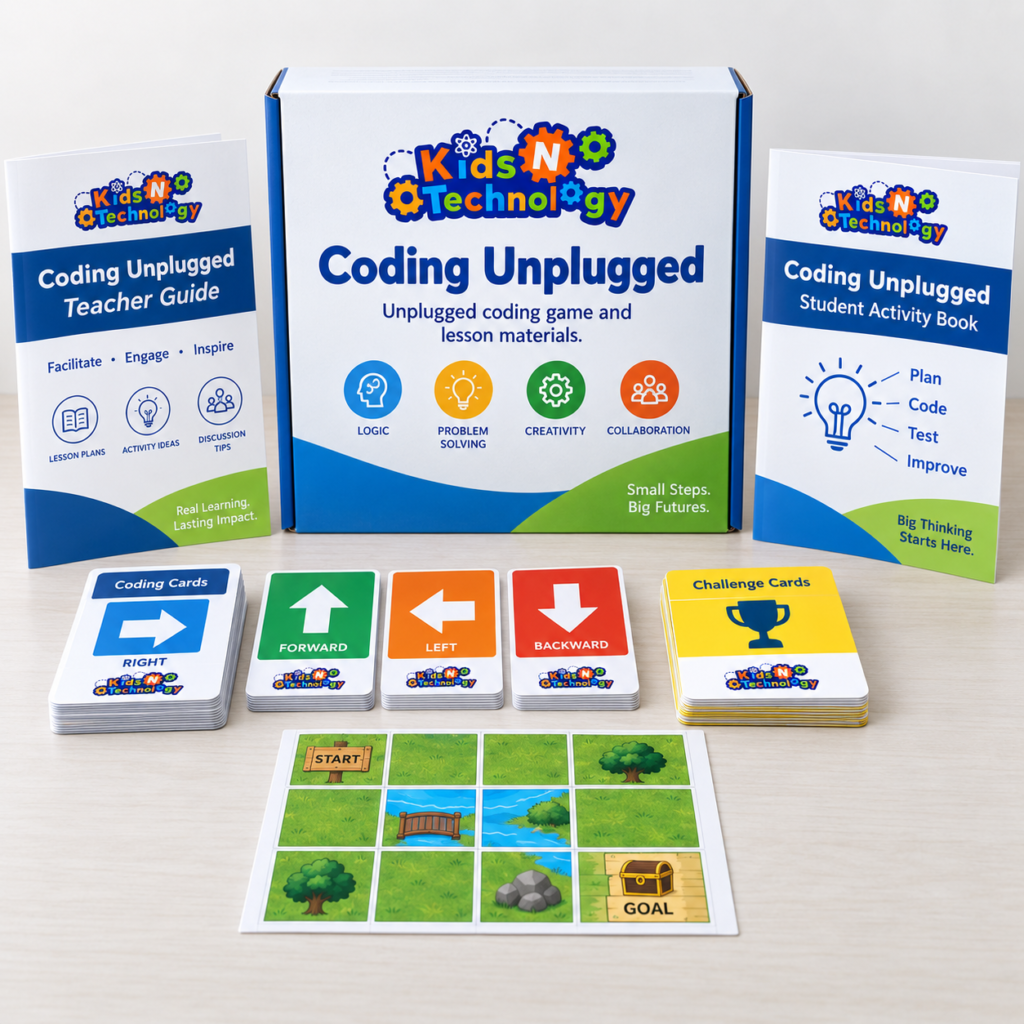
Supports up to 24 students. Students work in an unplugged environment to play a coding game that helps them understand how algorithms work, create step-by-step instructions, use loops, recognize patterns, and debug their way through increasingly challenging paths.
Catapult Challenge
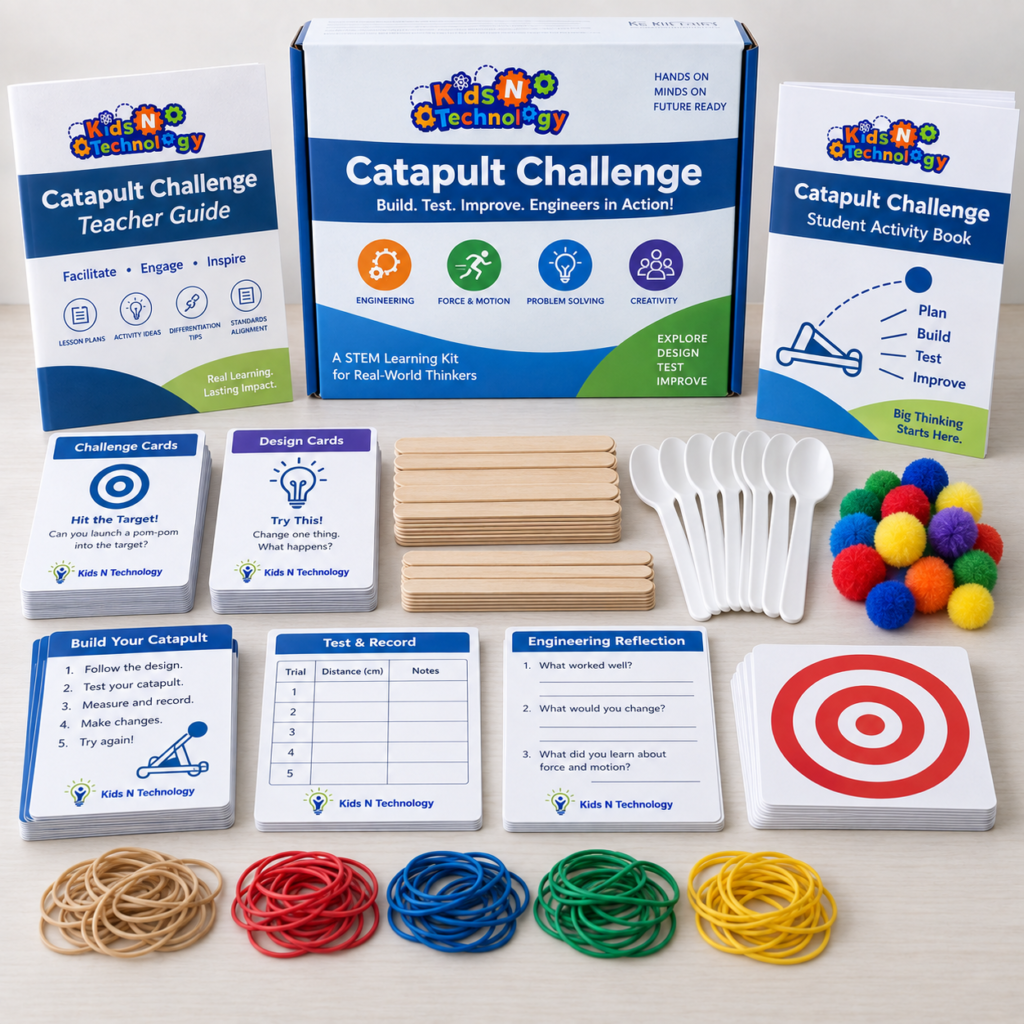
Supports up to 24 students. Students build working catapults, then launch, measure, test, and redesign them while learning how force, motion, energy, and launch angle affect performance and comparing AI predictions with real-world test results..
Slime Science
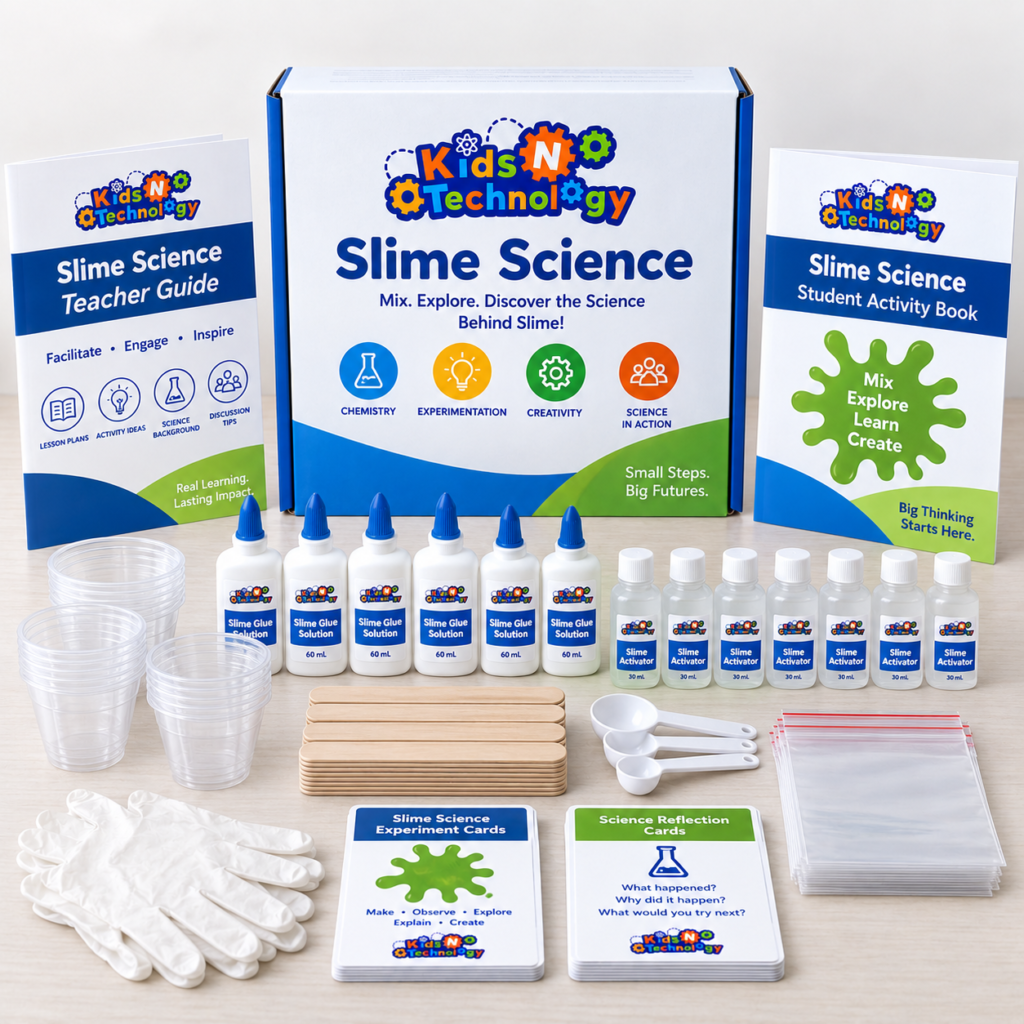
Supports up to 24 students. Students make their own slime, test texture and stretch, change variables, and refine their formulas while learning about polymers, chemical reactions, cause and effect, and how evidence supports scientific conclusions.
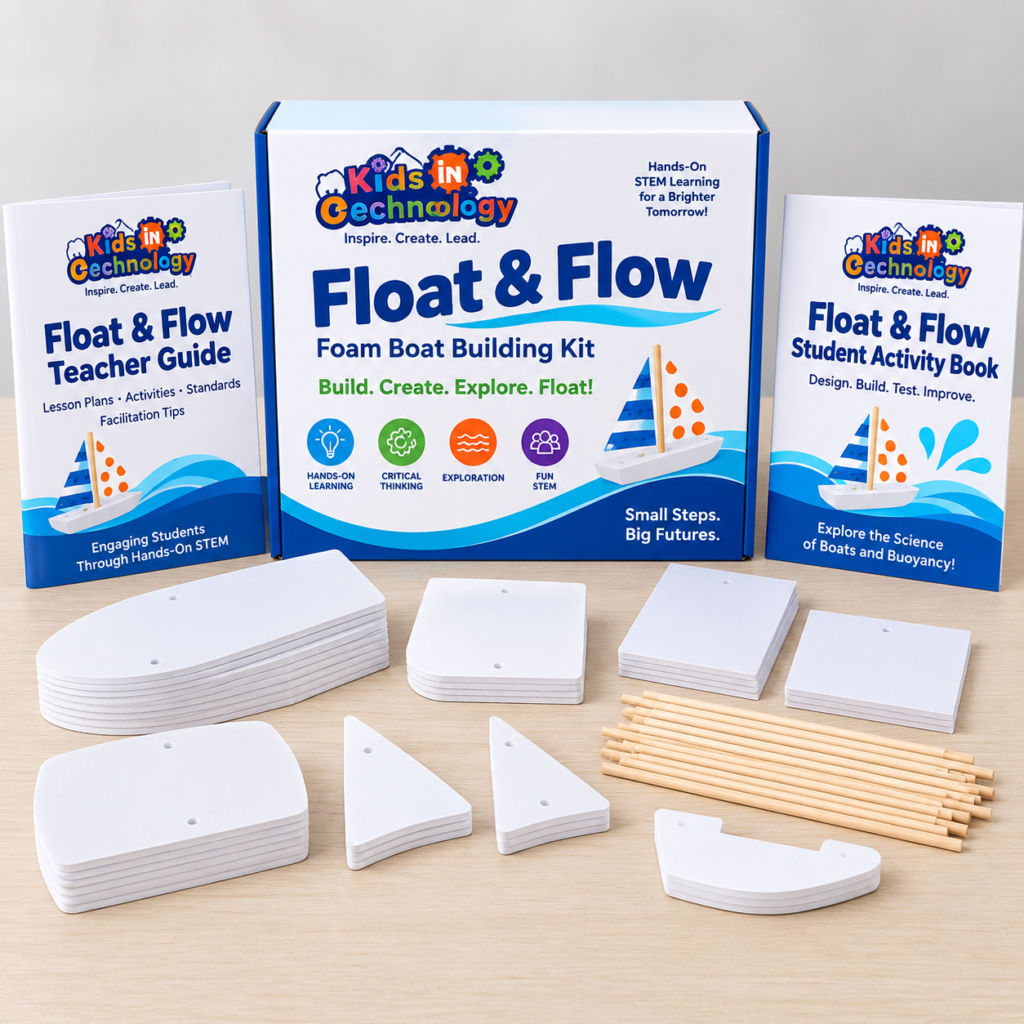
Float & Flow
Supports up to 24 students. Students build and test miniature sailboats, then adjust their designs while learning how buoyancy, wind, balance, and hull and sail choices affect performance through observation, measurement, and repeated testing.
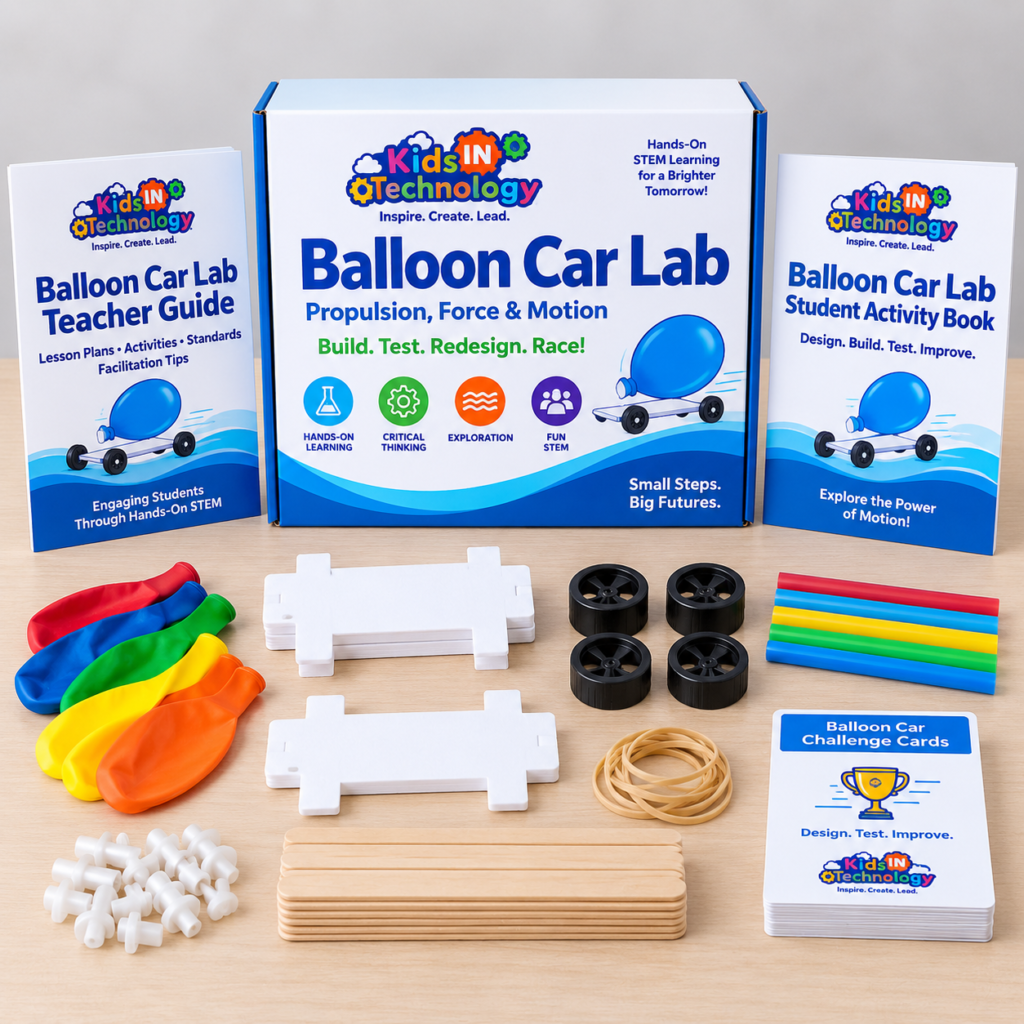
Balloon Car Lab
Supports up to 24 students. Students build and race balloon-powered cars, then test and redesign them while learning how propulsion, force, friction, wheel alignment, and other design choices affect distance, speed, and overall performance.
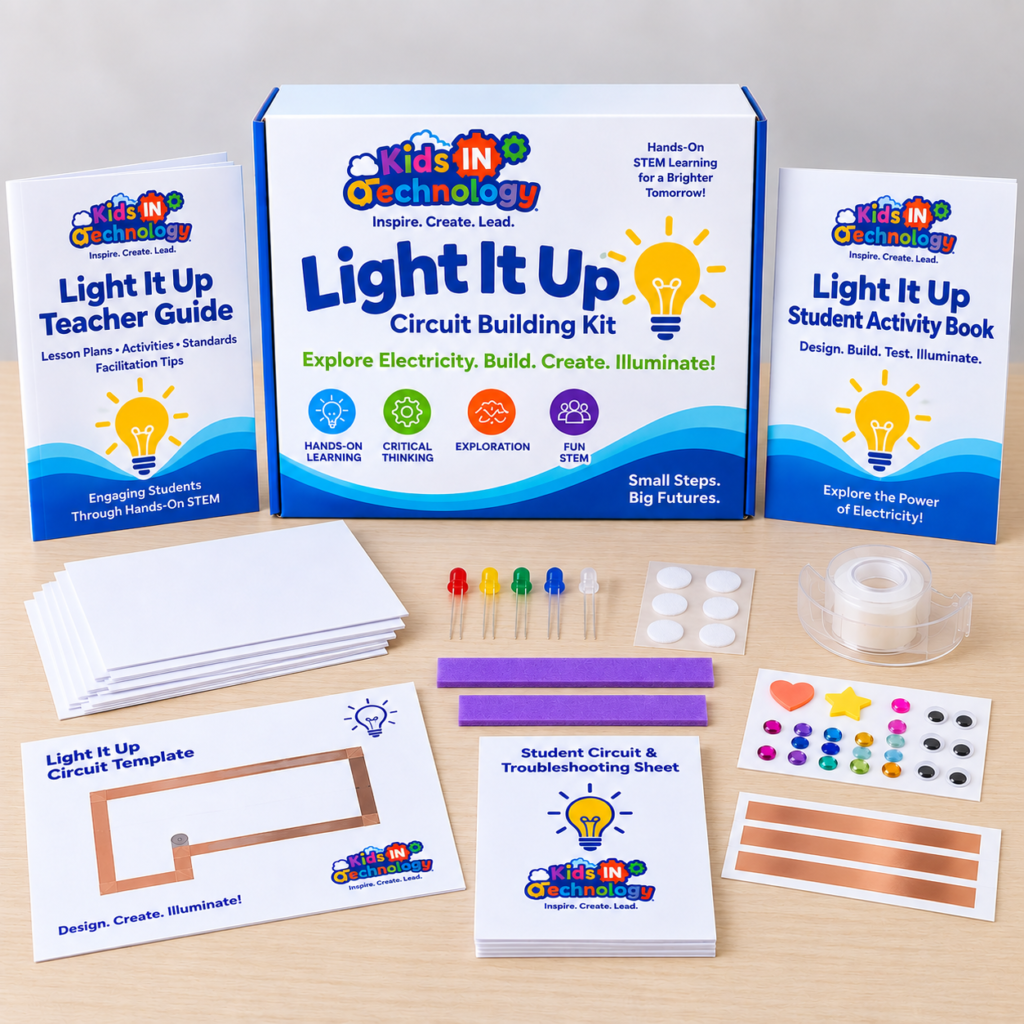
Light It Up
Supports up to 24 students. Students build working paper circuits with LEDs and conductive materials, then test and troubleshoot them while learning how electricity, polarity, conductivity, and circuit design work together to create a complete circuit.
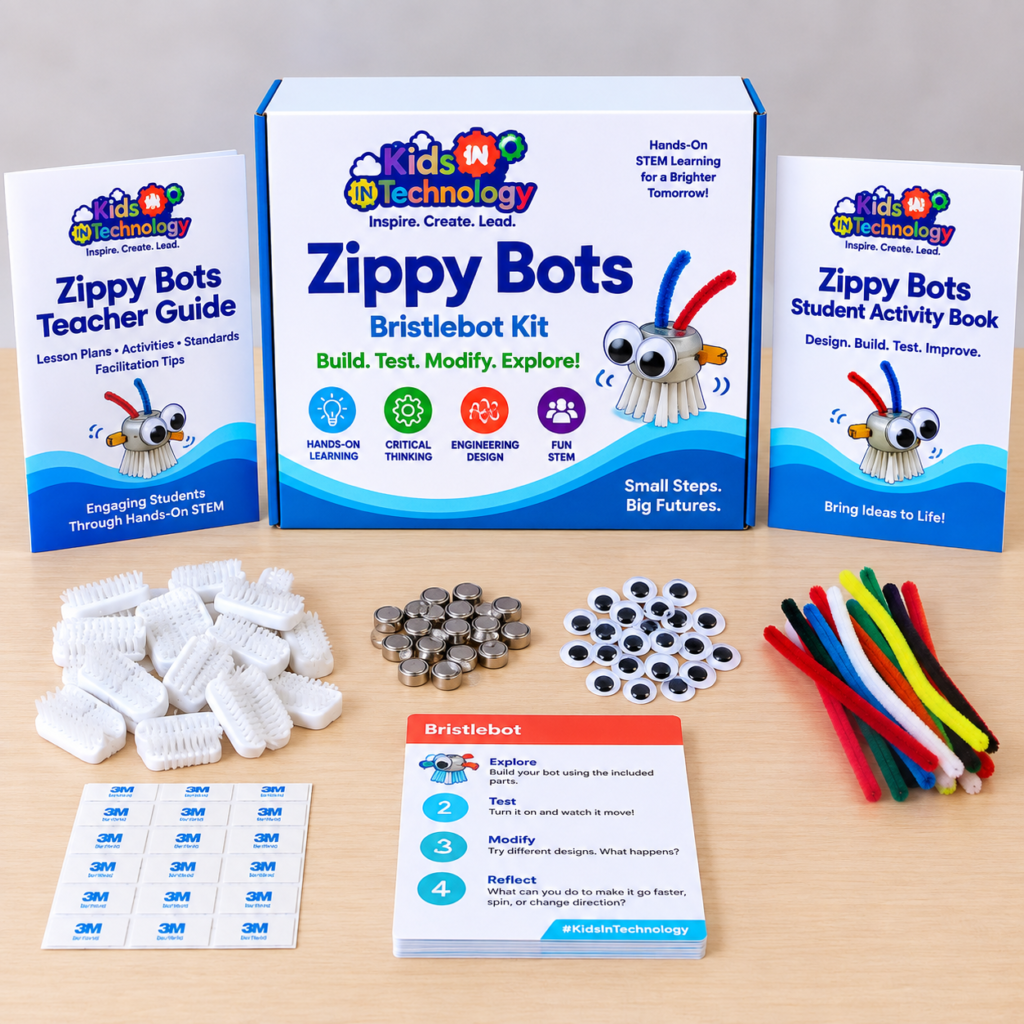
Zippy Bots
Supports up to 24 students. Students build vibrating bristle robots, then test and modify their designs while learning how motors, circuits, balance, friction, and weight placement affect movement, stability, and overall robotic performance.
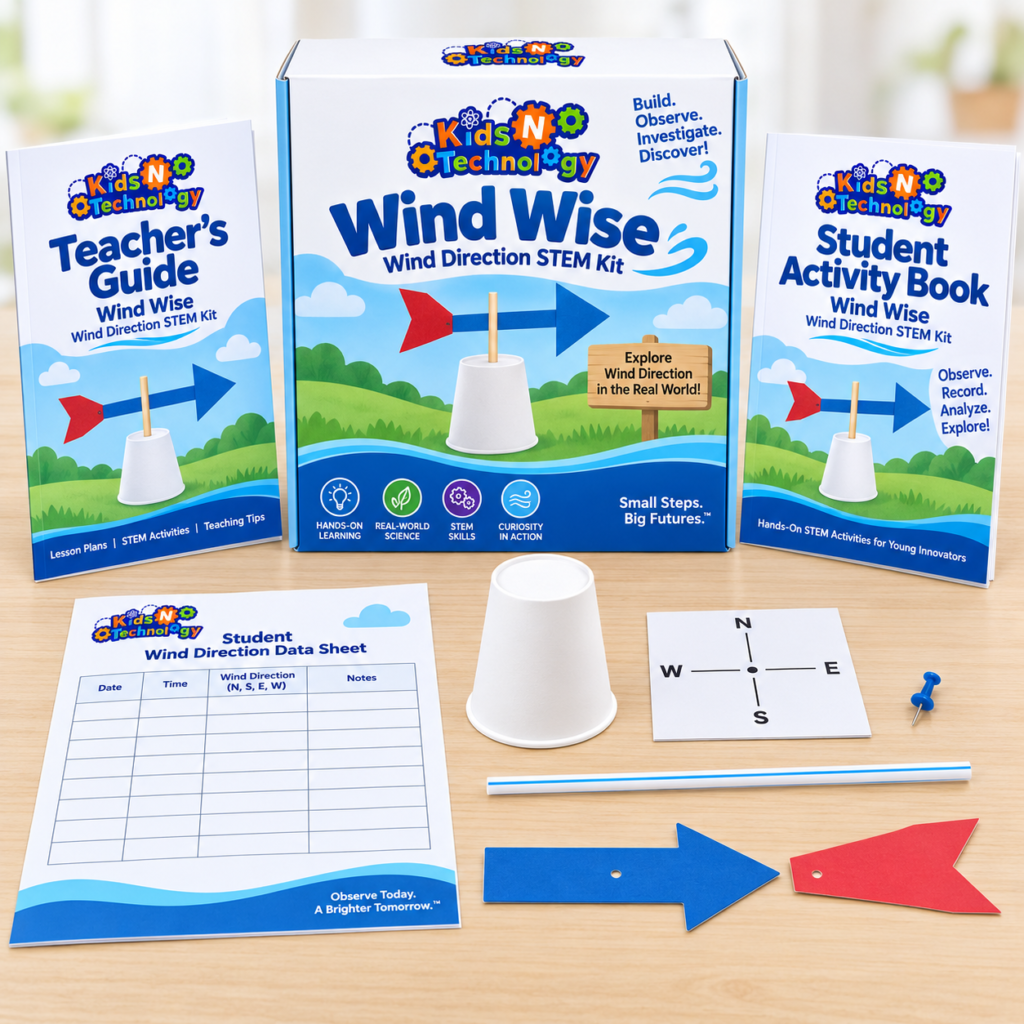
Wind Wise
Supports up to 24 students. Students build and test working weather vanes, collect wind-direction data, and improve their designs while learning how wind, measurement, observation, and instrument accuracy help scientists understand weather patterns.
AI Literacy + STEM Activity Packs
Hands-on AI literacy and STEM activities using guided lessons, printable resources, and easy-to-source classroom materials.
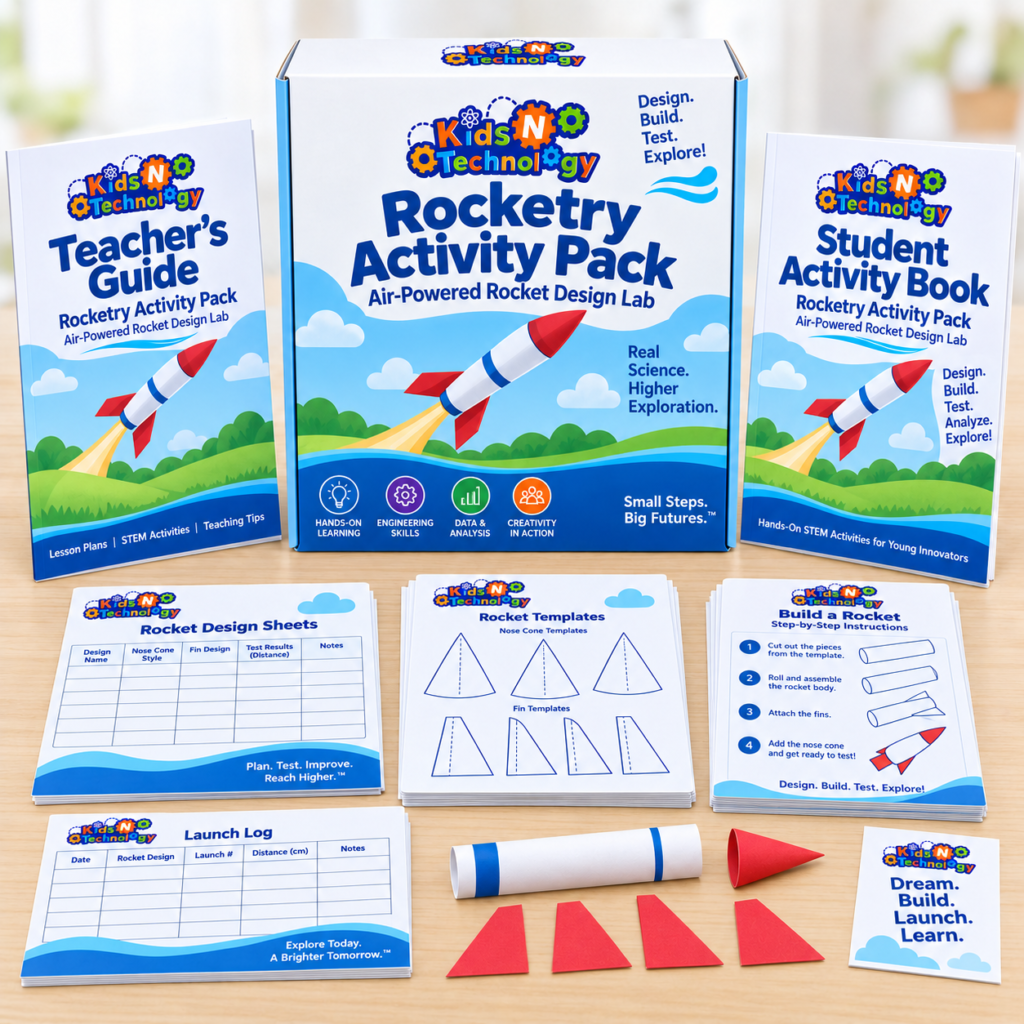
Rocketry Activity Pack
Supports up to 24 students. Students design, build, and test air-powered rockets, then measure and improve their designs while learning how force, motion, Newton’s Third Law, and engineering decisions affect flight performance.
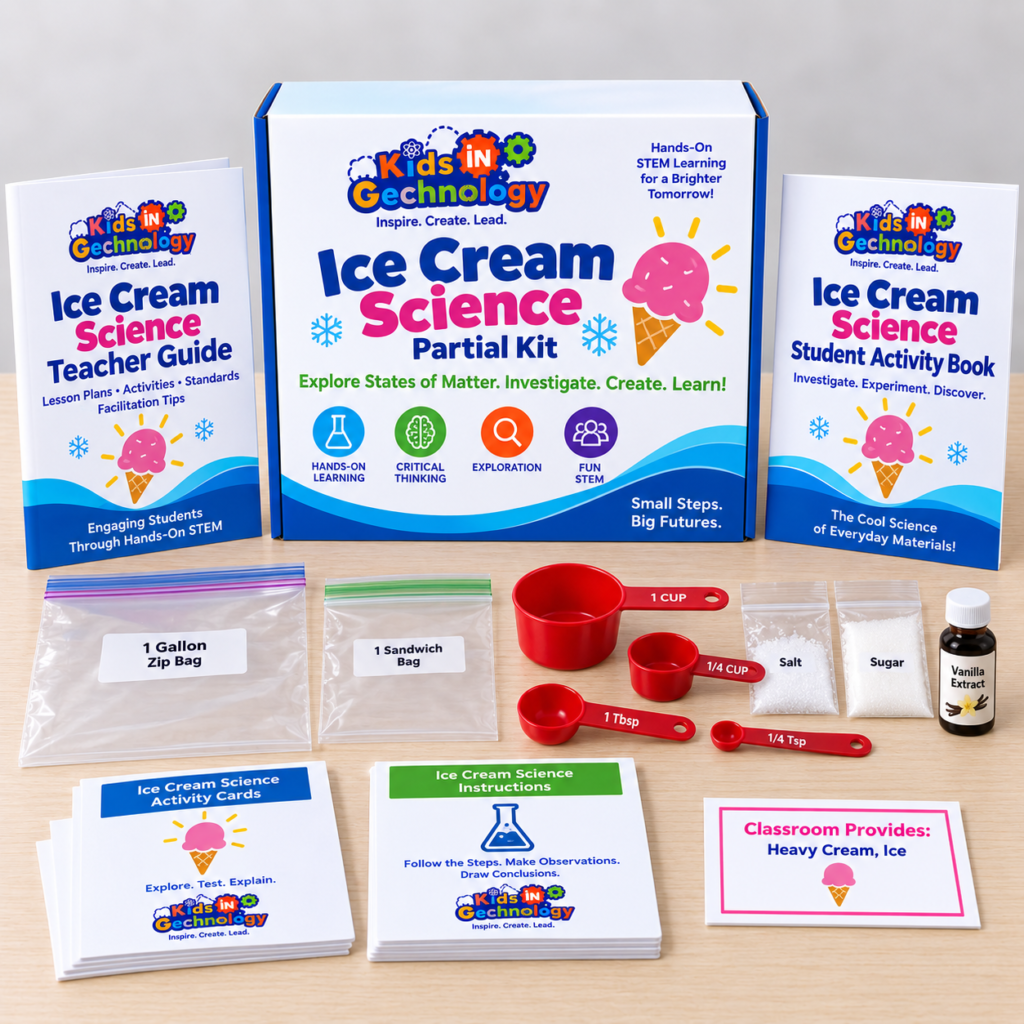
Ice Cream Science Partial Kit
Supports up to 24 students. Students make their own ice cream while investigating temperature, states of matter, freezing-point changes, measurement, and how scientific variables affect the final results.
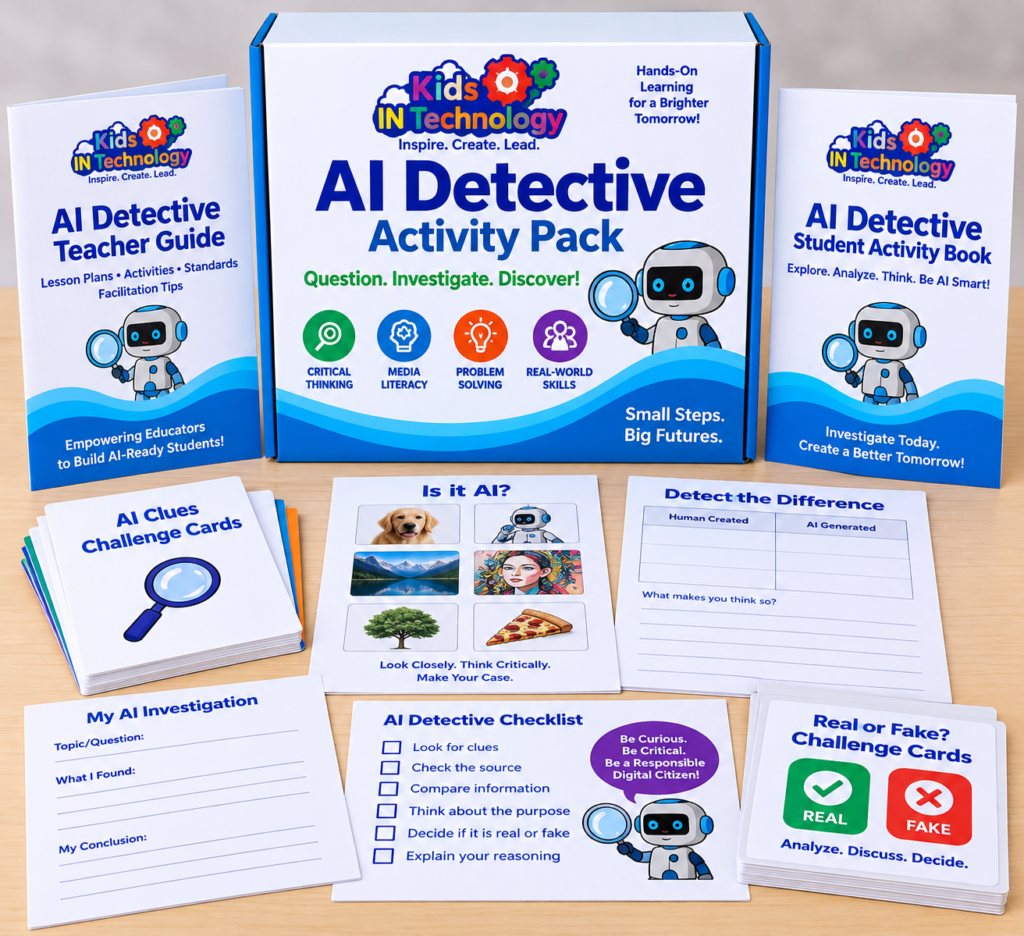
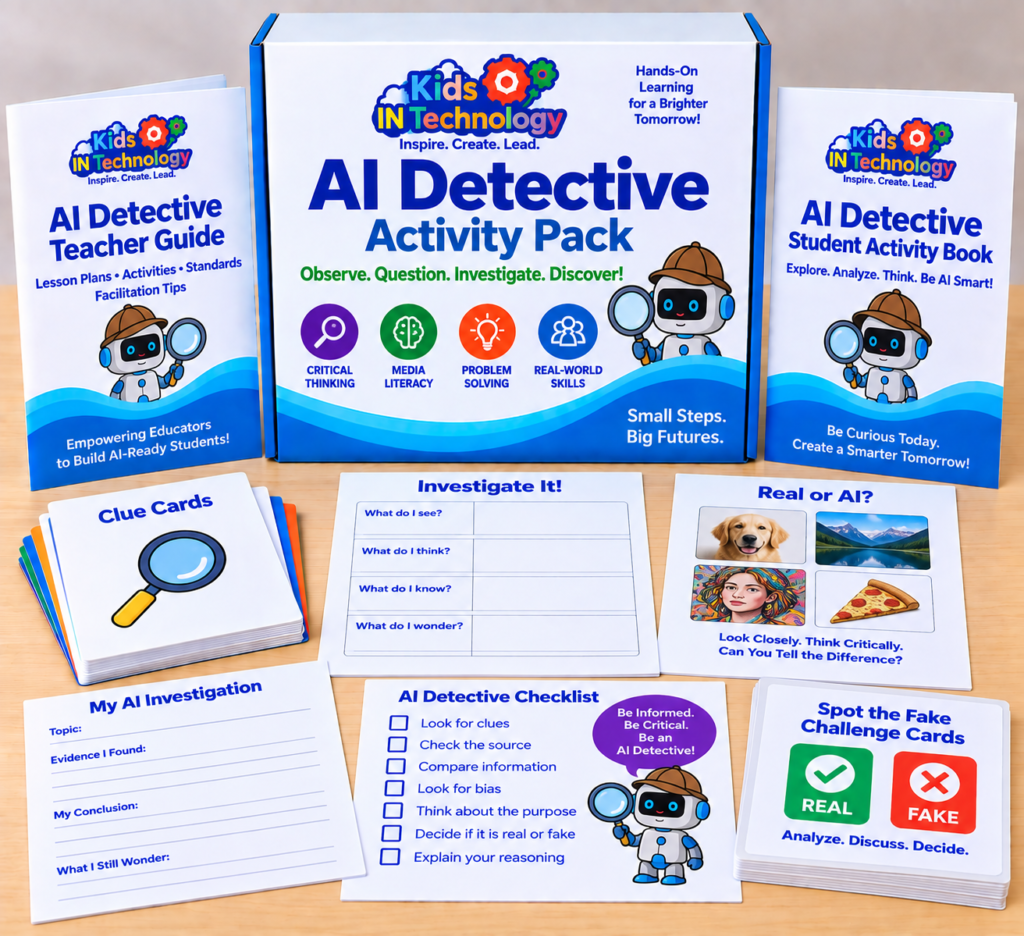
AI Detective Activity Pack
Supports up to 24 students. Students investigate examples of AI in everyday life, examine clues and patterns, and learn how to distinguish AI-powered technology from systems that do not actually use artificial intelligence.
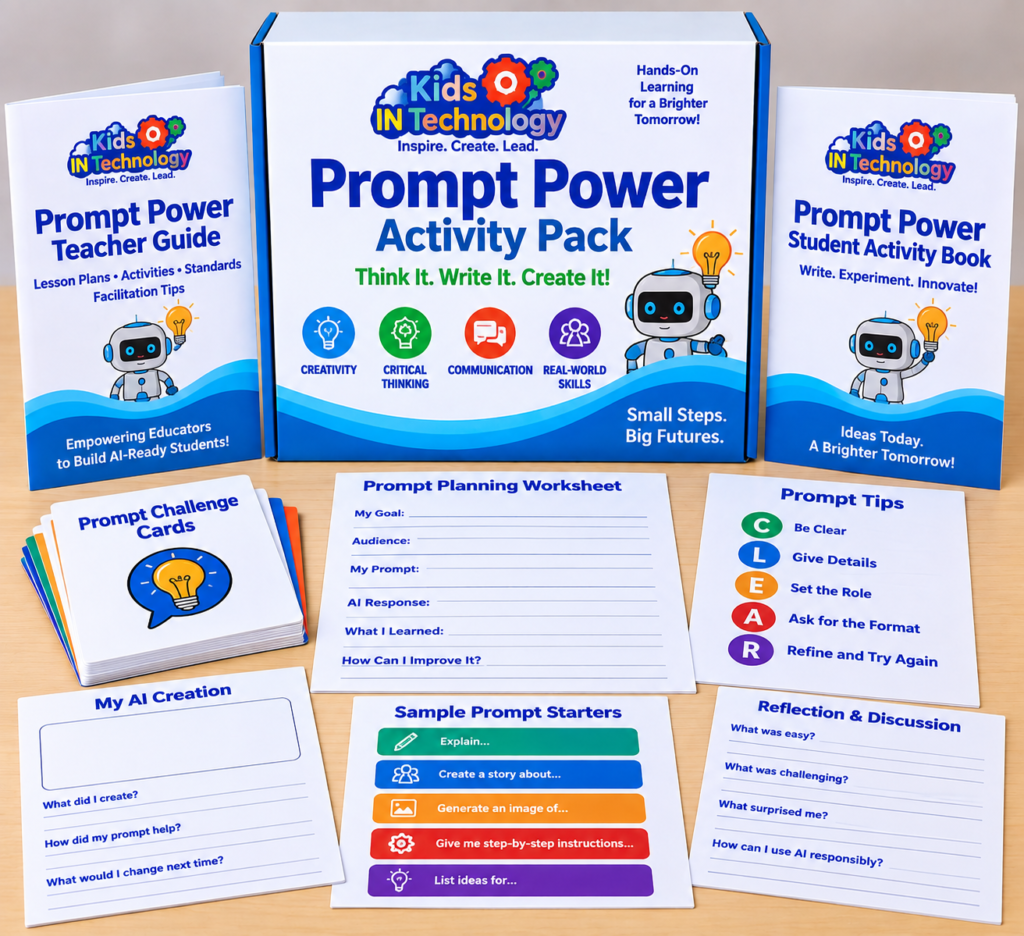
Prompt Power Activity Pack
Supports up to 24 students. Students use prompt cards and challenges to learn how clear instructions, details, context, and word choices influence the responses produced by an artificial intelligence system.
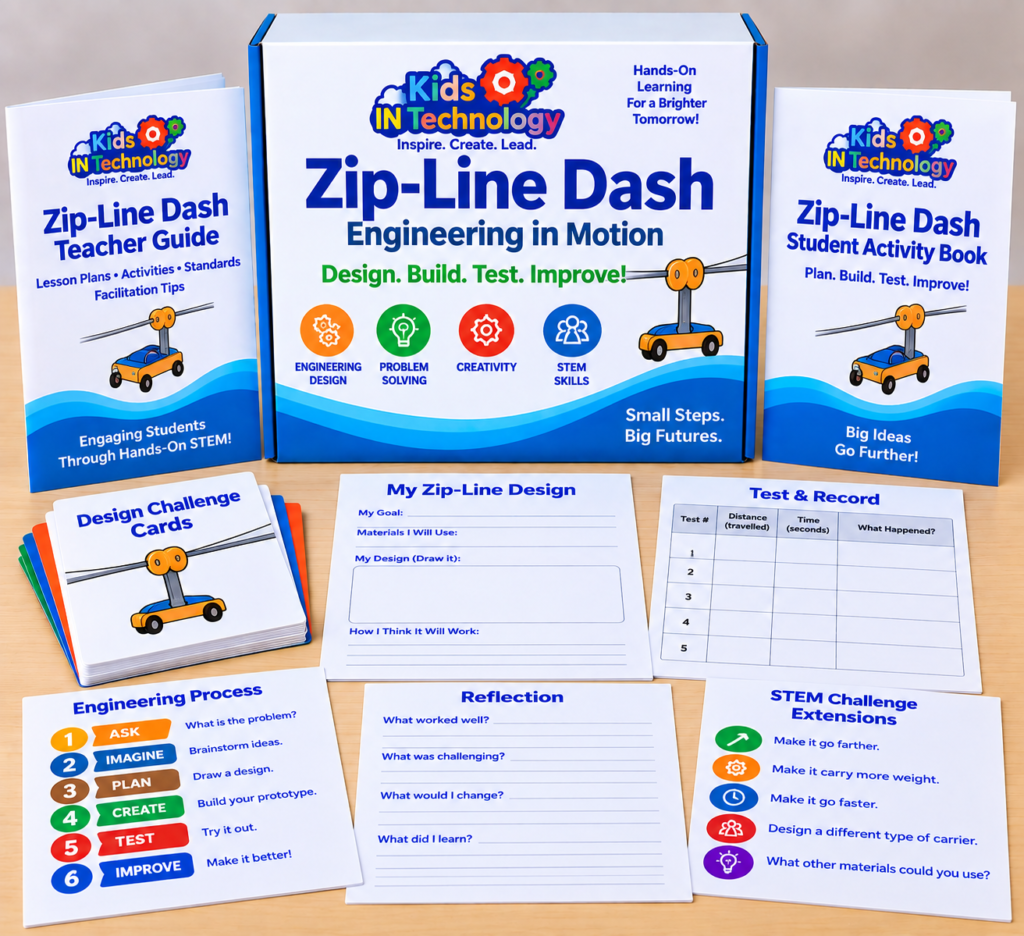
Zip-Line Dash: Engineering in Motion
Supports up to 24 students. Students design, build, and test a zip-line carrier, then measure performance, adjust weight and friction, and redesign their prototypes while exploring gravity, motion, stability, and engineering tradeoffs.
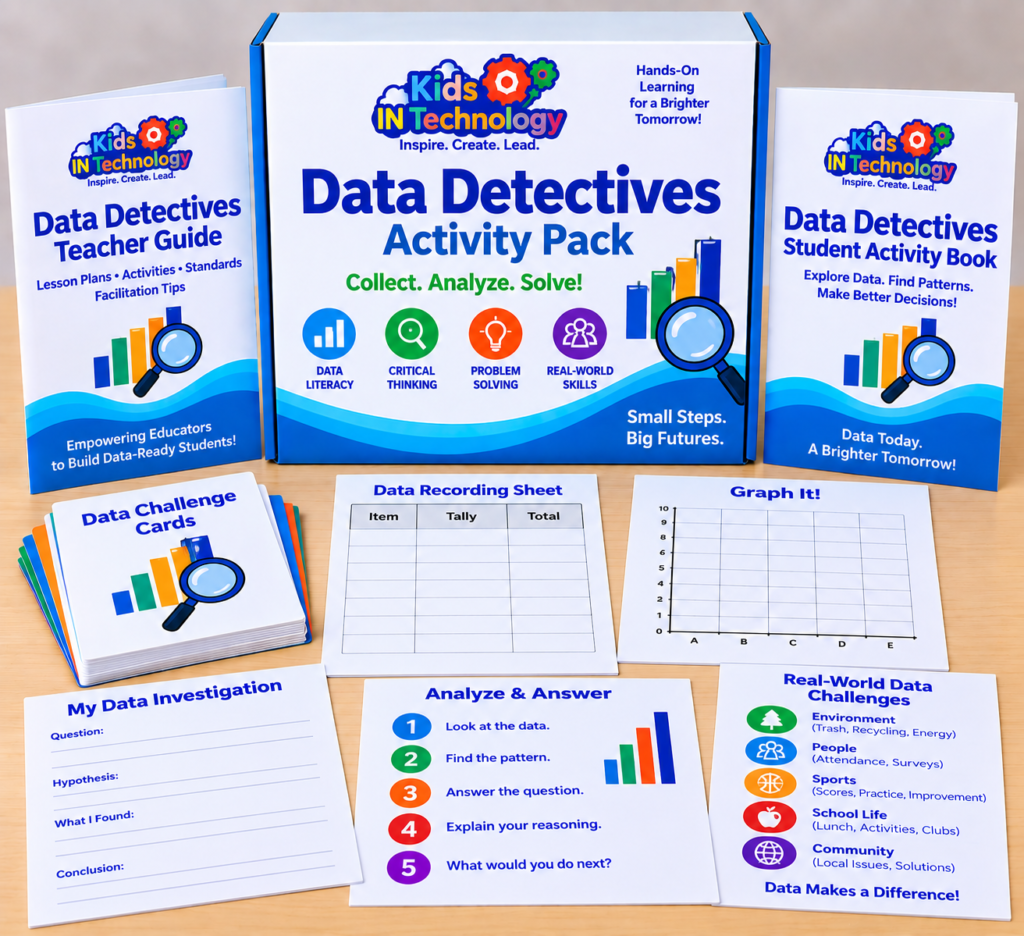
Data Detectives Activity Pack
Supports up to 24 students. Students sort, classify, and analyze data to discover patterns, make predictions, and learn how the quality and organization of data can influence decisions made by AI systems.
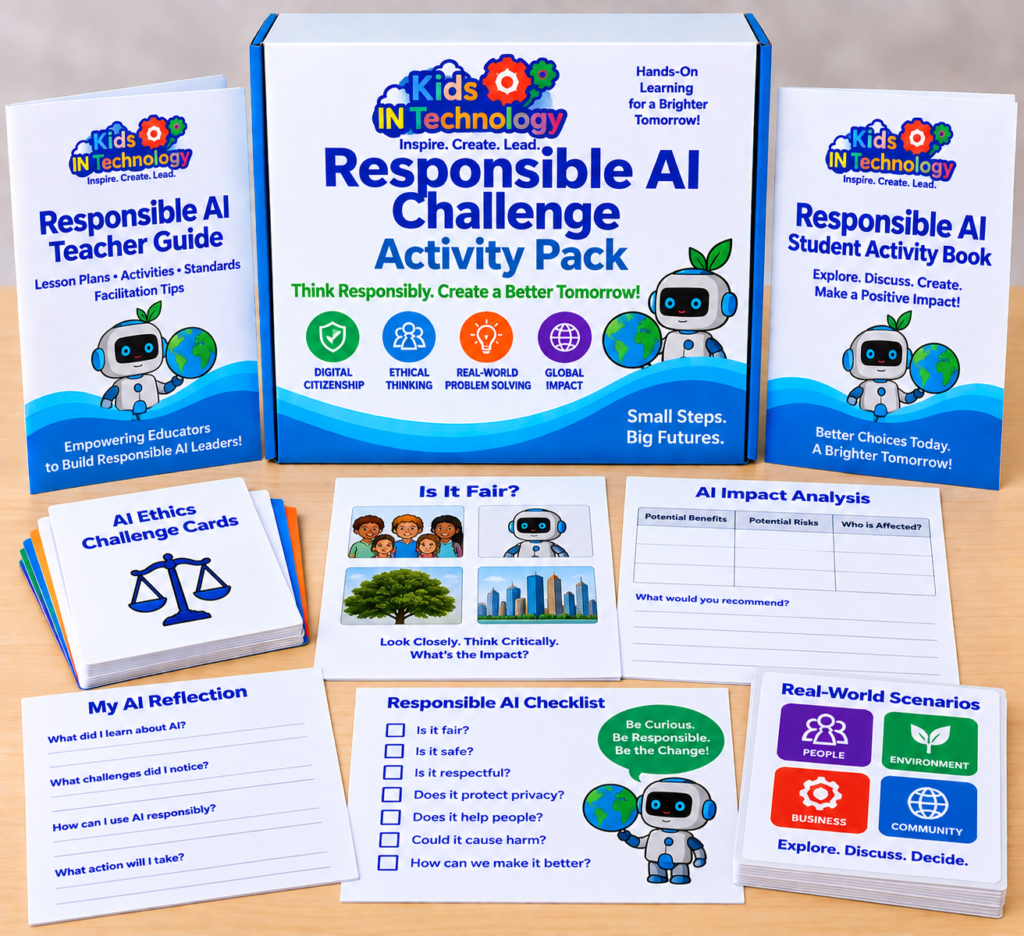
Responsible AI Challenge Activity Pack
Supports up to 24 students. Students work through real-world AI scenarios involving privacy, accuracy, fairness, and responsible use while learning to evaluate choices, explain their reasoning, and make informed decisions.
AI Design Challenge Activity Pack
Supports up to 24 students. Students identify a real-world problem, develop an AI-assisted solution, and use the KNT I.D.E.A.S.™ Framework to plan, evaluate, improve, and present their innovative design.
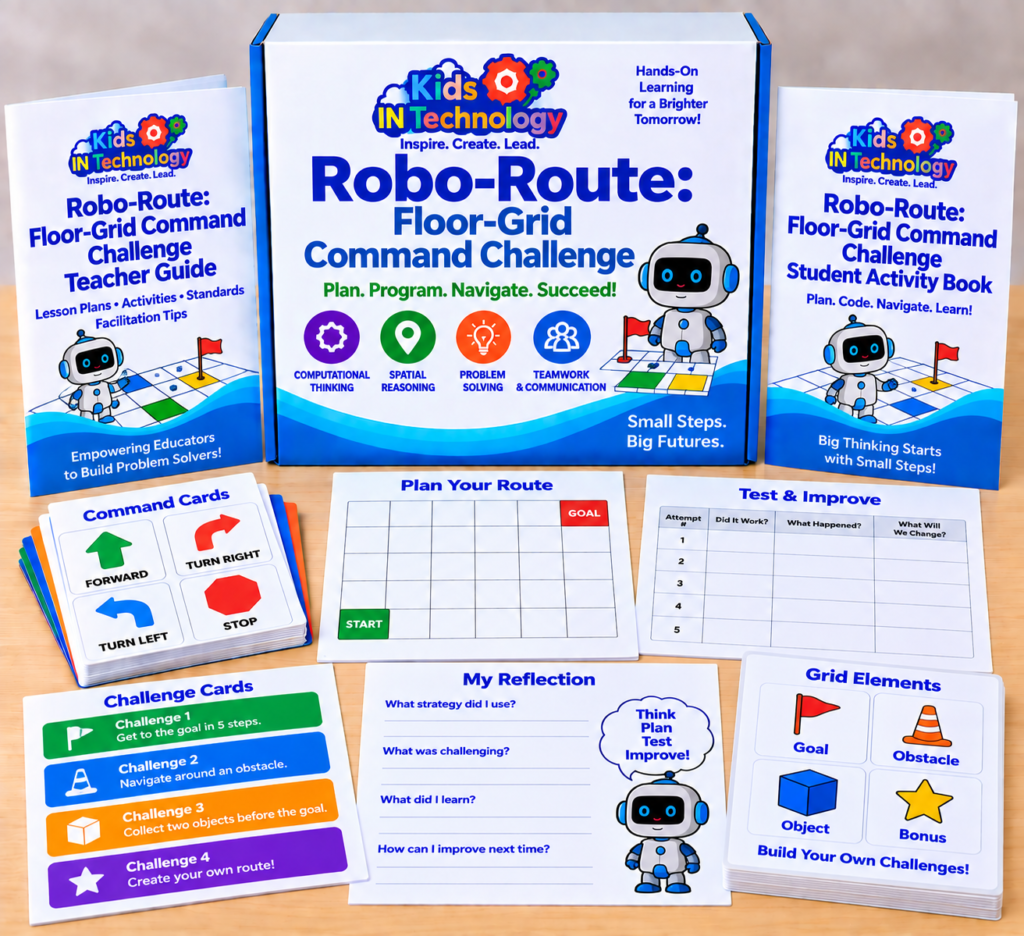
Robo-Route: Floor-Grid Command Challenge
Supports up to 24 students. Students work in small teams to program a human robot through a floor-grid game, creating algorithms, sequencing commands, using loops, debugging mistakes, and solving increasingly challenging routes.
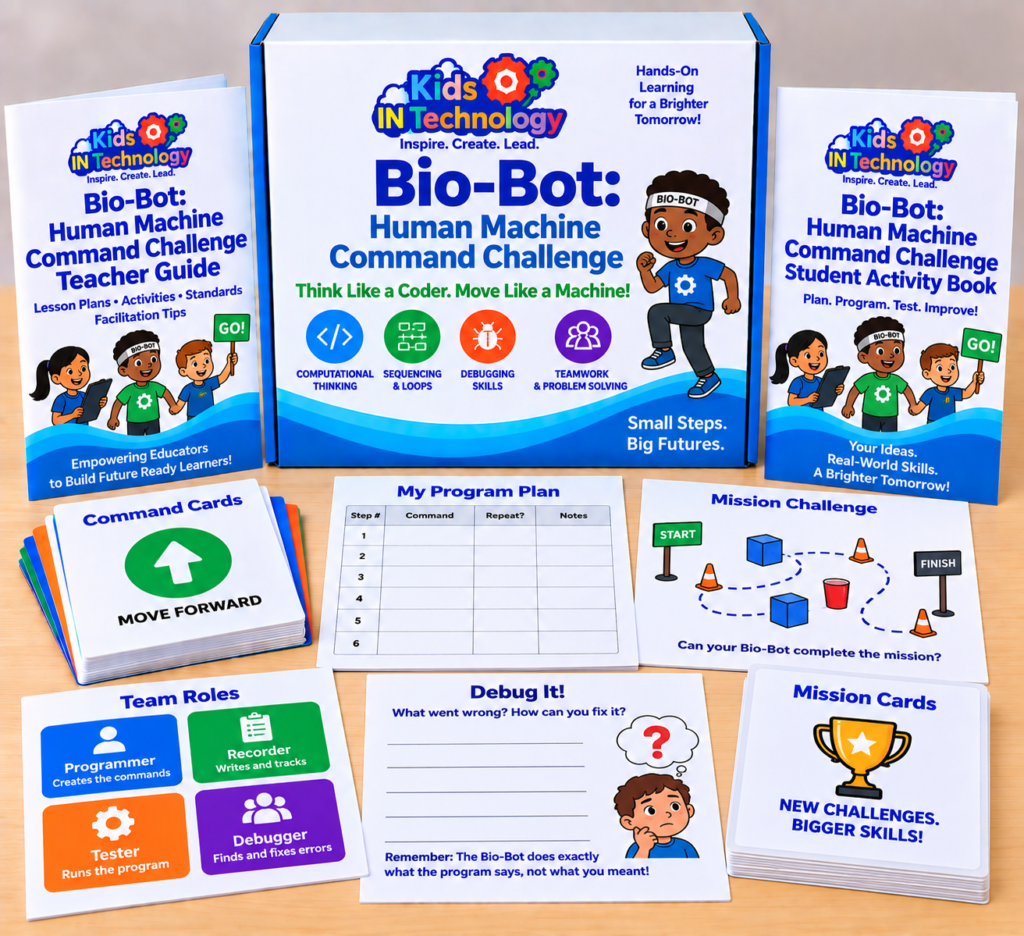
Bio-Bot: Human Machine Command Challenge
Supports up to 24 students. Students turn a teammate into a programmable human machine, creating command sequences, executing physical missions, using loops, predicting outcomes, and debugging programs when the Bio-Bot does not perform as intended.
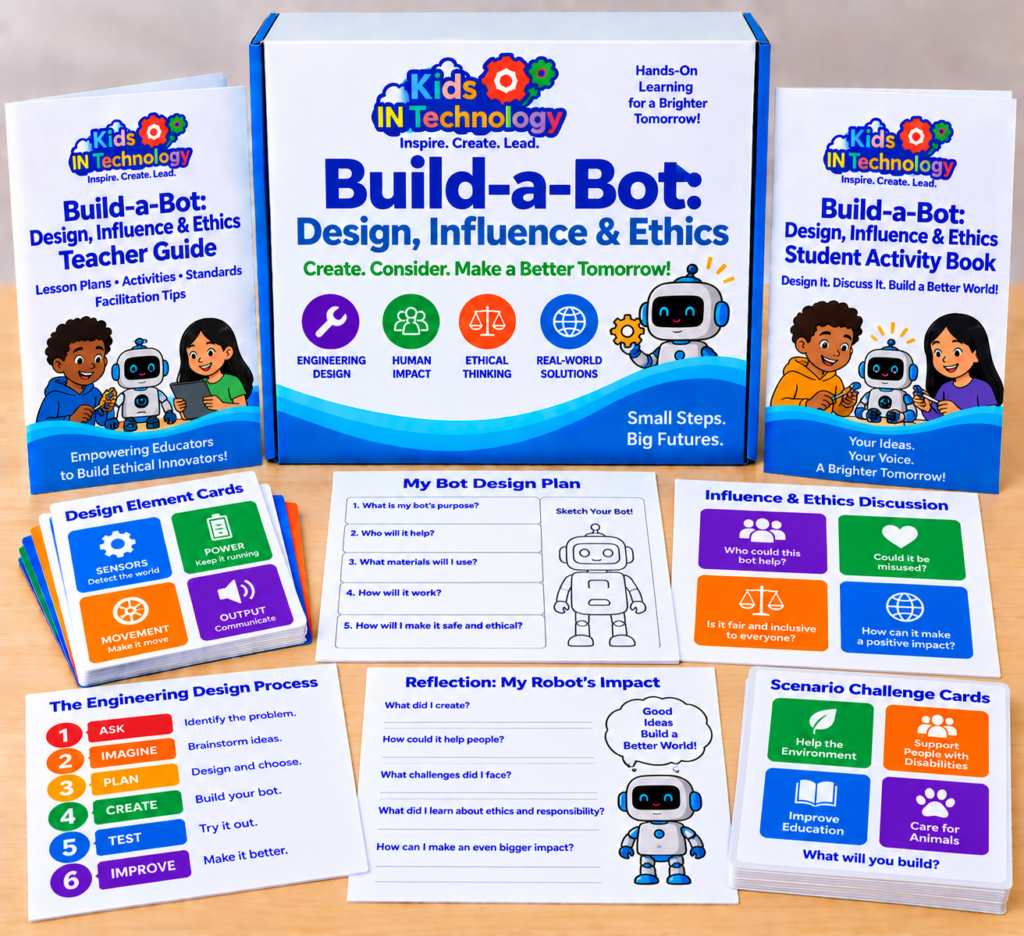
Build-a-Bot: Design, Influence & Ethics
Supports up to 24 students. Students design and build their own social-robot prototypes, develop a hypothesis, test how people respond, collect data, redesign their bots, and explore how technology can influence human behavior and ethical decision-making.
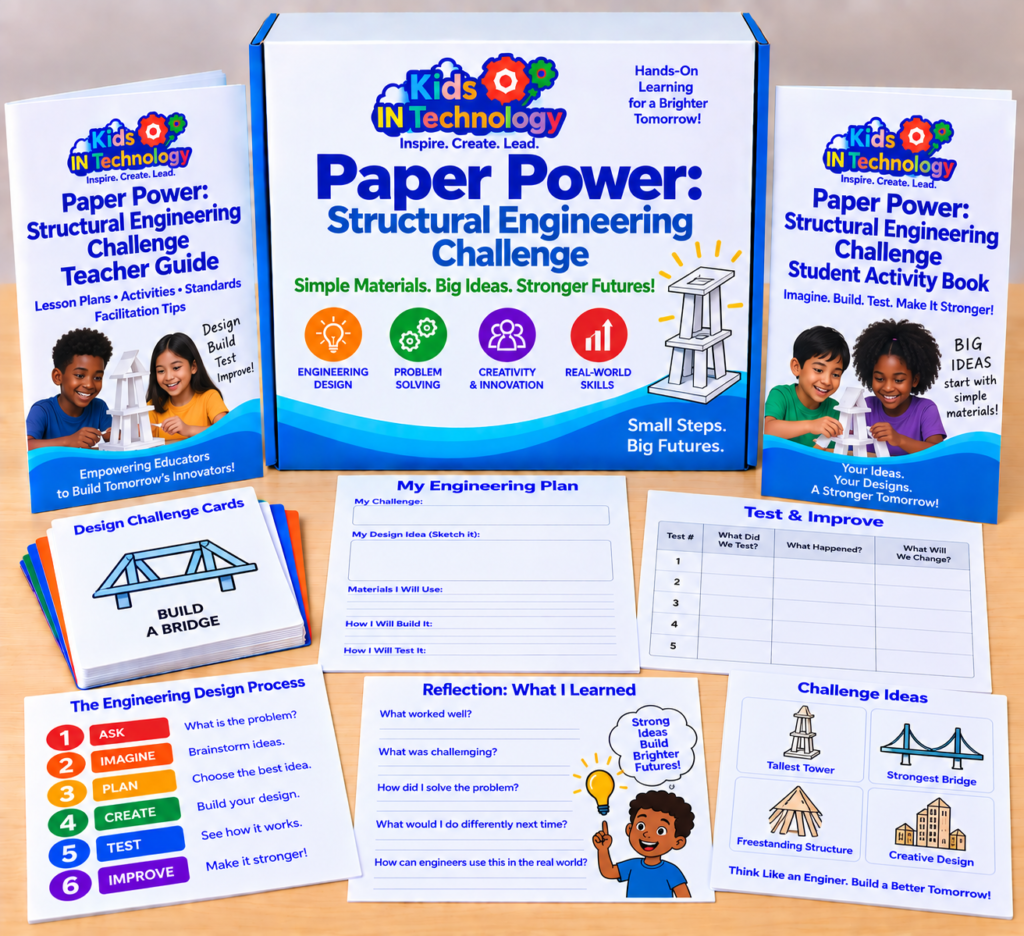
Paper Power: Structural Engineering Challenge
Supports up to 24 students. Students design, build, and test load-bearing paper structures, then strengthen and redesign them while exploring stability, compression, material efficiency, and structural engineering.
Every KNT kit and activity connects to a structured, project-based lesson.
